

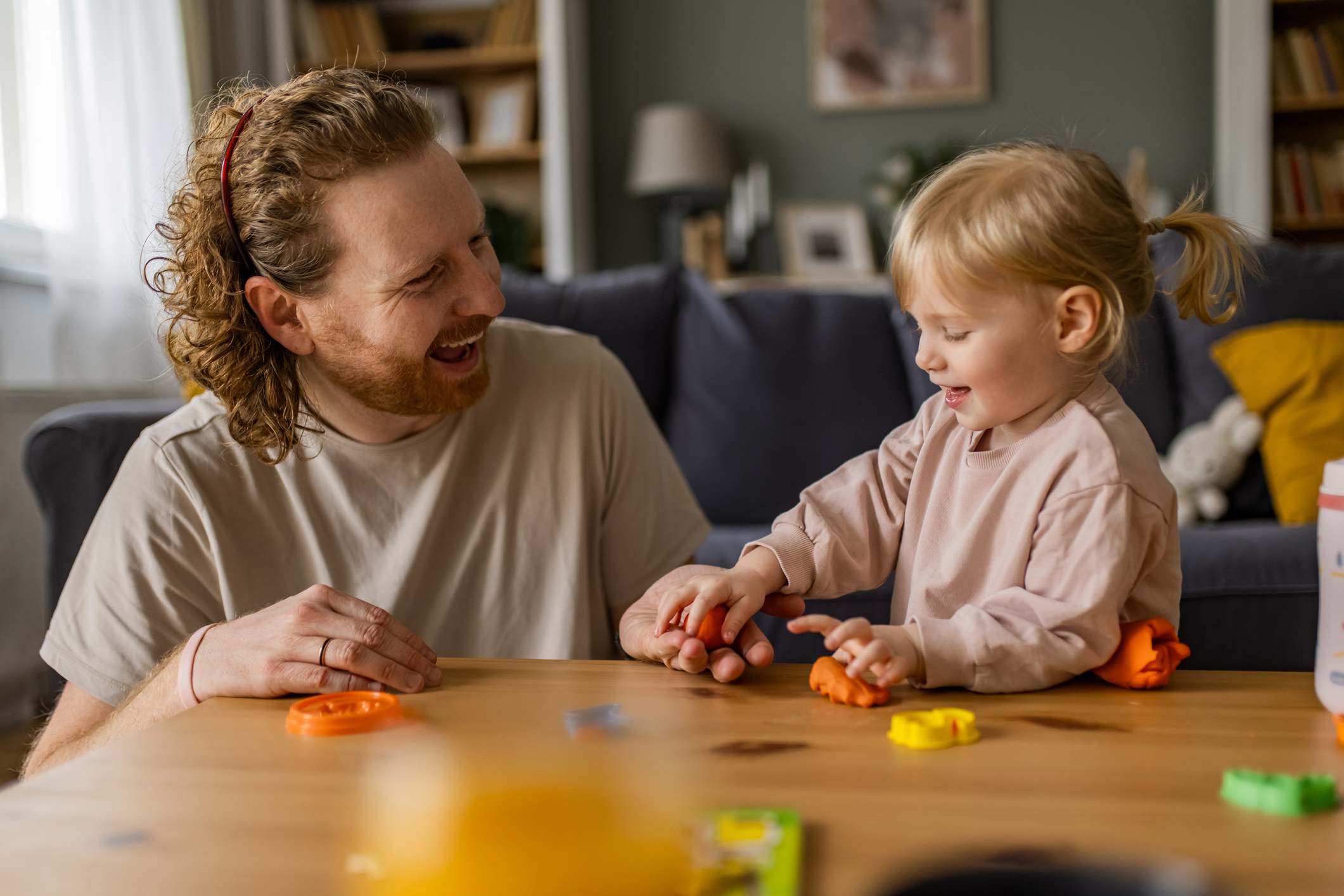
Everyone has their own communication style, and children are no exception. Just like adults, some children seem to talk nonstop, while others are quieter and take their time before jumping into conversation.
As your child develops speech and language skills, though, it’s natural to worry. Is their quietness simply part of who they are, or are they experiencing a speech delay?
Fortunately, there are many ways to help your child develop strong speech skills. By spending time communicating with your child and noticing how they express themselves, you can better understand their communication style, whether they are simply quieter by nature or experiencing a delay, and what will help them feel comfortable and confident speaking.
The Difference Between Not Speaking Much and Delayed Speech
There are several reasons your child may not speak much, particularly early in language development. Some children are naturally quieter and take time to observe before using words. Others may be experiencing speech or language challenges that make communication more difficult.
Understanding the difference between a less talkative child and a child who is experiencing a delay is an important first step in deciding what kind of support can help your child feel more comfortable communicating.
Signs Your Child Is Simply Quiet
When your child is simply quieter by nature, they usually can:
- Follow simple directions
- Make eye contact
- Engage comfortably in play with peers
- Show interest in books, toys, or social interaction
- Use sounds, facial expressions, or body language to express wants and needs
Signs of a Possible Speech Delay
When your child’s limited speech may be the result of a delay, they often:
- Use fewer spoken words than expected for their age
- Have difficulty combining words into phrases
- Are hard to understand, even for family and close friends
- Become frustrated when trying to communicate
- Rely mostly on gestures or sounds instead of words
- Show limited progress in speech development over time
If you notice several of these signs or feel unsure about your child’s speech development, reaching out to a pediatric speech therapist for an evaluation can give you the insight and guidance you need.
Ways to Encourage Your Child to Talk
Regardless of whether your child is simply quieter by nature or experiencing a speech delay, practicing speech and communication with your child is an important step in helping them become a clearer, more confident communicator. The following are gentle, practical strategies you can weave into your daily routines that can encourage your child to talk more.
- Keep language simple: Using shorter phrases can make it easier for your child to understand and try new words. Instead of long or complex sentences, focus on brief, clear phrases that match what’s happening in the moment. Simple language lowers the effort needed to respond and makes it easier for your child to join the exchange.
- Follow your child’s lead: Joining your child in activities they already enjoy increases the likelihood that they will communicate. Talking about what they’re doing as it happens helps language feel meaningful and naturally invites participation.
- Repeat words during familiar routines: Repeating the same word several times helps your child recognize patterns and anticipate what comes next. Using repetition during routines like meals, playtime, or bedtime gives your child repeated chances to hear and eventually use words within an interaction.
- Support communication with gestures and visuals: Using gestures such as pointing, nodding, or showing objects can support communication while your child is still learning to use words. Pairing your child’s gestures with simple words or phrases helps turn those moments into back-and-forth exchanges.
- Pause and give your child time: Allowing extra time after a question or comment gives your child space to process language and respond. Pausing quietly signals that a response is expected and supports participation in their own way.
- Build on what your child says: Responding to your child by adding one or two words shows how language can grow naturally during conversation. For example, if your child says “ball,” you might respond with “big ball” or “throw ball.” This models slightly longer phrases without asking your child to repeat or change what they said.
- Turn sounds into play: Using playful sound-making creates low-pressure opportunities for interaction. Encouraging animal sounds, vehicle noises, or exaggerated vocal play helps your child practice taking turns and builds the rhythm of conversation before words are fully in place.
- Make reading interactive: Sharing books creates natural moments for communication. Pointing out pictures, naming familiar objects, and pausing for responses help your child participate in conversations in a comfortable, predictable setting.
How Speech Therapy Can Help
Whether your child is naturally quiet or experiencing a speech delay, working with a speech therapist is an effective way to help your child develop clear, confident communication. A speech therapist adjusts their approach based on why your child isn’t speaking much and what support will help communication feel easier.
For children who are naturally quiet, speech therapy focuses on:
- Increasing comfort with communication rather than increasing how often your child speaks
- Creating low-pressure opportunities for interaction during play and shared activities
- Practicing how to initiate, respond to, and participate in conversation at your child’s pace
- Building confidence so your child feels comfortable speaking when they have something to share
For children with speech delays, speech therapy focuses on:
- Identifying which speech or language skills are making communication difficult
- Strengthening clarity, vocabulary, and sentence-building skills through targeted activities
- Reducing frustration by making it easier for your child to express ideas successfully
- Supporting more consistent communication so your child feels confident participating in conversation
Reach Out to Gigi’s Kids for a Free Consultation
If you’re concerned about your child’s speech and language skills and you are in the West Bloomfield, MI, area, Gigi’s Kids Speech and Language Therapy can help. Call us at (248) 735-8080 or fill out our online contact form to schedule a free consultation. We look forward to helping your child learn to express themselves confidently and become an enthusiastic communicator.
Author
Amanda G. Tompkins, MS, CCC-SLP is the founder and owner of Gigi’s Kids Speech & Language Therapy and has been certified by the American Speech and Hearing Association (ASHA) since 2000. With over 25 years of pediatric experience, she has worked extensively in the Bloomfield Hills Schools Deaf and Hard of Hearing program and led a speech therapy department at a center affiliated with autism services. Amanda holds the ASHA Award for Continuing Education (ACE) and continues to share her expertise through trainings for preschools, parent groups, and educators.