

Does your child get frustrated or have tantrums because they can’t make themselves understood, leaving you frantically trying to figure out what they want?
Do they seem to get confused or have trouble understanding simple, age-appropriate directions?
Do they point or gesture when asking for something rather than using words—for example, leading you by the hand to the fridge when they want a snack?
While it’s true that every child develops communication skills at their own pace, and some children are simply a little later to talk, these may be early signs of a language delay.
Understanding the signs of language delay is the first step to getting your child the support they need to be fully heard, understood, and able to express their needs and ideas confidently, clearly, and without frustration.
What Is a Language Delay?
A language delay is when your child’s ability to understand or use spoken language is taking longer to develop than expected.
It’s important to note that speech delay and language delay are often used interchangeably, but they refer to different parts of communication. A speech delay typically relates to how your child produces sounds and forms words, while a language delay involves how your child understands and uses words.
In everyday life, a language delay may show up in how your child understands language or uses words to communicate. You might notice your child having difficulty with:
- Following simple directions
- Responding to their name
- Naming familiar objects
- Using words consistently
- Putting words together to express their needs or share a thought
Over time, these challenges can leave your child feeling frustrated, misunderstood, or left out when they’re trying to connect with others.
The Causes of a Language Delay
There are many reasons why language development may take more time for some children. In some cases, it may be related to hearing differences, developmental conditions such as autism, or reduced exposure to language-rich interactions.
For many children, however, there is no clear underlying cause. Some children are simply “late talkers” who need a little more time and the right support to develop their communication skills.
Signs of a Language Delay in Children
These signs are based on general age-related developmental milestones. While milestones are not strict deadlines and every child develops at their own pace, they can offer helpful guidance if you’re concerned your child may be experiencing a language delay.
By 6 to 9 Months
- Avoiding eye contact or social engagement, such as not smiling back during interactions
- Limiting sound exploration, such as not experimenting with “ba-ba” or “da-da”
By 12 Months
- Ignoring common gestures, such as not waving “bye-bye” or pointing to objects
- Showing a reduced response to shared attention, such as not looking when you point
- Failing to respond consistently to their name
By 18 Months
- Relying mostly on pointing or reaching instead of trying to use sounds or words
- Using fewer than 10 words
- Struggling to imitate sounds or simple actions
By 2 Years
- Saying fewer than 50 words
- Using only one word at a time instead of combining words (such as “more juice”)
- Struggling to understand simple, one-step directions
By 3 to 4 Years
- Struggling to form longer sentences or find the right words
- Using vague language, such as “stuff” or “things,” instead of specific names
- Experiencing frequent frustration or withdrawing from play because they feel misunderstood
The Importance of Early Intervention for a Language Delay
The first few years of your child’s life are when language skills develop most rapidly. During this time, your child’s brain is especially receptive to learning, making this an important window for supporting their communication development.
Language skills also shape how your child learns, connects, and participates in everyday life, including:
- Enabling your child to follow directions, solve simple problems, and make sense of the world around them
- Helping your child play with others, share ideas, and feel more included
- Giving your child the words they need to express themselves, feel understood, and make social interactions feel easier and more enjoyable
- Building the vocabulary and understanding your child will need for reading, writing, and learning in school
Because these skills are developing so quickly during this time, early support can make a meaningful difference. If you suspect that your child may be experiencing a language delay, it is never too early to reach out to a speech therapist for support.
How Speech Therapy Helps a Language Delay
A speech therapist is trained to understand not just what your child is struggling with, but why. They look at how your child understands language, expresses themselves, and interacts with others to identify any underlying challenges that may be affecting communication.
Based on this, your child’s speech therapist develops a personalized plan tailored to their specific needs. They have the expertise to support a wide range of language and speech differences, whether related to developmental delays, neurological factors, or simply needing more support and confidence when communicating.
What Speech Therapy for Language Delays May Look Like
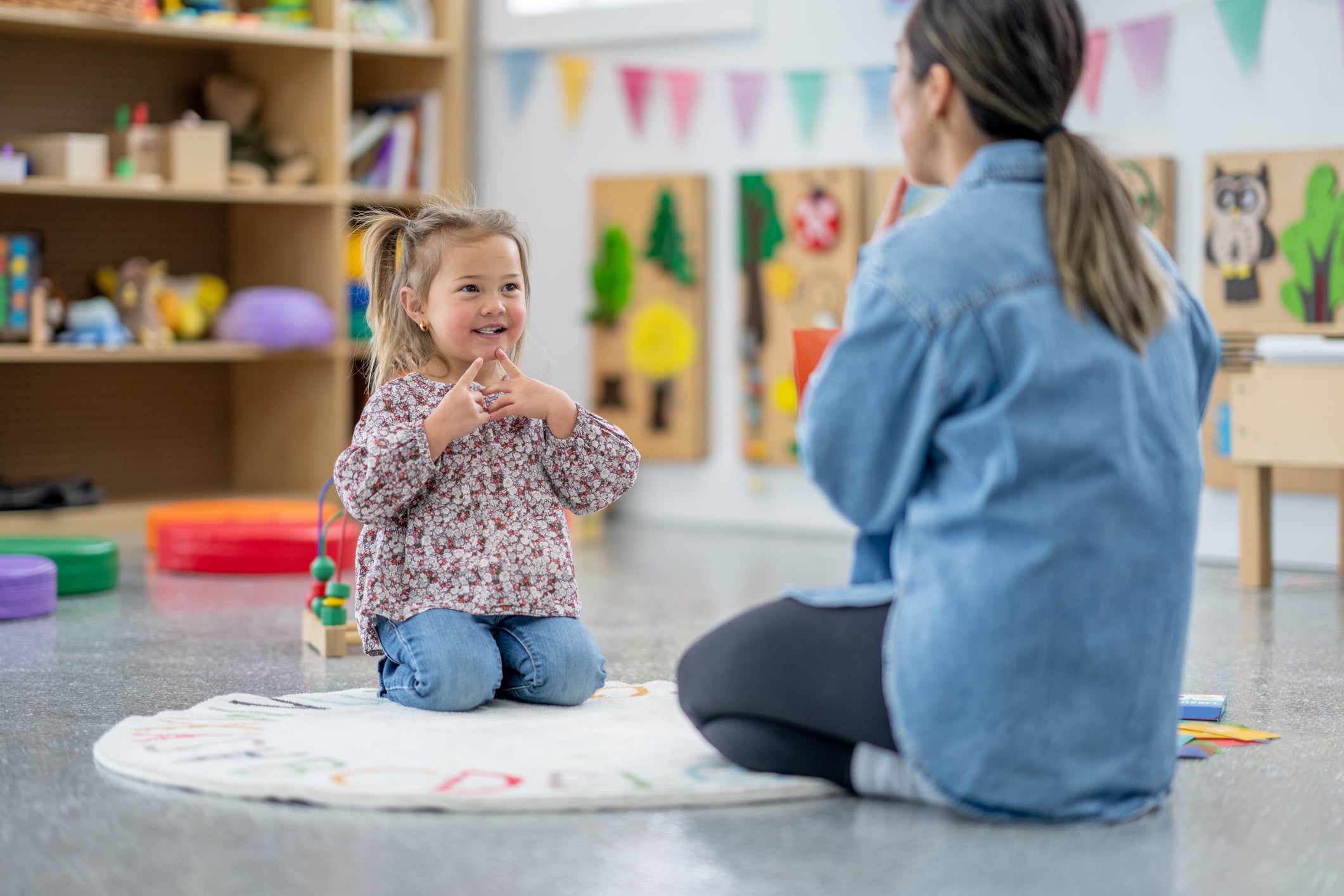
Speech therapy sessions are designed to be engaging, supportive, and tailored to your child’s needs. Activities may include:
- Matching pictures to words or reading books together to help your child build vocabulary and understand new words
- Practicing sequencing activities, like putting pictures in order or retelling simple stories, to help your child move from single words to expressing full ideas
- Playing turn-taking games to strengthen listening skills and back-and-forth interaction
- Role-playing everyday situations like asking for help or joining a game
- Celebrating successes to build confidence and encourage your child to keep communicating
Reach Out to Gigi’s Kids
If you’re concerned that your child may have a language delay and you are in the West Bloomfield, MI, area, Gigi’s Kids Speech and Language Therapy can help. Call (248) 735-8080 or fill out our online contact form to schedule a free consultation. We look forward to helping your child better understand language so they can express themselves clearly, feel understood, and confidently take part in the conversations around them in their daily lives.

Author
Amanda G. Tompkins, MS, CCC-SLP is the founder and owner of Gigi’s Kids Speech & Language Therapy and has been certified by the American Speech and Hearing Association (ASHA) since 2000. With over 25 years of pediatric experience, she has worked extensively in the Bloomfield Hills Schools Deaf and Hard of Hearing program and led a speech therapy department at a center affiliated with autism services. Amanda holds the ASHA Award for Continuing Education (ACE) and continues to share her expertise through trainings for preschools, parent groups, and educators.